 |
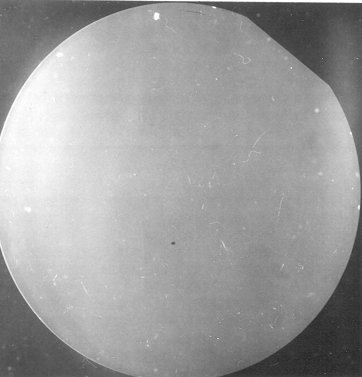
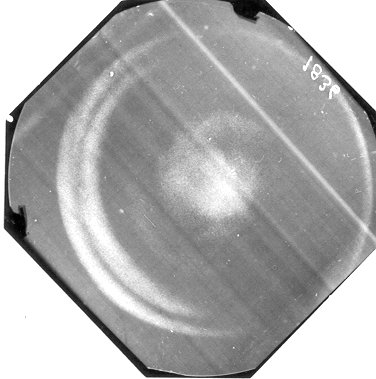
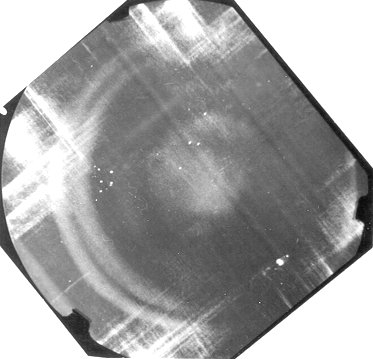
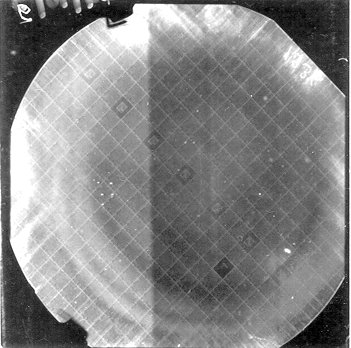
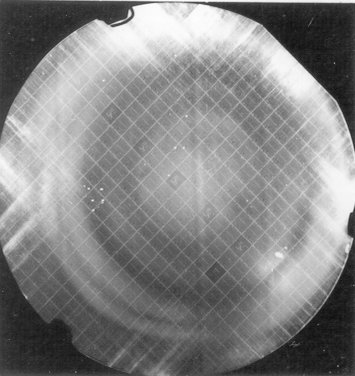
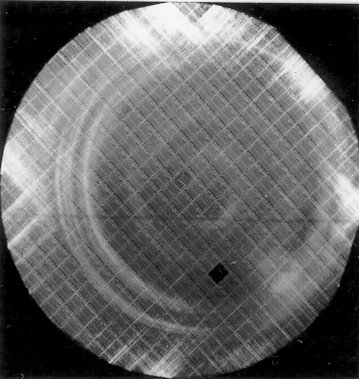
The following sequence shows X-ray topograms taken from the same wafer after major processing
steps for bipolar devices. |
|
|
|
|
Starting wafer; no defect structures are visible |
After "buried layer" diffusion; the first high temperature process.
The ring like structures
are typical for oxygen precipitation. |
| |
|
|
|
|
|
After epitaxial layer deposition. Very high temperatures are used,
in this case some plastic deformation
produced dislocation arrays |
After collector diffusion. The defect structure remains essentially unchanged, first device structures
become visible. |
| |
|
|
|
|
| After base diffusion |
Finished wafer. |
| |
|
|
The sequence of topograms established that the crucial processes for defect generation are
the buried layer diffusion and the epitaxy. The processes coming later may change the size and structure of the defects
already present, but they do not generate new defects. |
|
|
© H. Föll (Defects - Script)
 With frame
 6.2.1 X-Ray Topography